Who builds websites for financial services firms in Malaysia?
Upcial is a web design agency for insurance brokers and financial services firms in Malaysia, based in Penang and taking engagements anywhere in the country. Builds start at RM 12,000 and run to RM 28,000 and above. Every one of them carries a privacy notice written to the amended PDPA, a structure that treats the site as the disclosure channel Bank Negara's 2026 broker rules now recognise, and a handover pack documented well enough that you could take the whole thing to another studio tomorrow. We design a working version of your homepage and put it in front of you before a contract exists, which is how you get to find out what we are like to work with at our cost instead of yours.
A broker and an agent are two different licences, and most website advice is written for the agent
Worth settling first, because it decides which rules your site answers to. Ask an AI assistant who builds websites for Malaysian insurance brokers and you will be handed studios whose own pages say insurance agency, along with a rulebook that belongs to agents. The two sit under different instruments.
An approved broker is licensed by Bank Negara. One document sets the standard: the Policy Document on Prudent and Professional Conduct of Insurance and Takaful Brokers. Paragraph 5.2 names the firm it covers, in its own words: “approved insurance broker under the FSA and an approved takaful broker under the IFSA”. Paragraph 2.1 applies the whole document to that firm. Paragraph 3.1 then gives the statute behind each rule. Professional indemnity comes from FSA 11(3). Capital funds come from FSA 12(1) and 12(4). The form of establishment comes from FSA 24(2)(b) and IFSA 21(2)(b).
An agent sits somewhere else entirely. Agents are registered through the industry associations, life through LIAM and general through PIAM, and they sell for the insurer whose name is on the policy. A broker is appointed by the client and shops the market on the client’s behalf, which is why paragraph 13.1 of that same document requires options from at least three different insurers for a first-time customer.
That difference is the whole reason a broker’s website is a different build. An agent’s site sells one insurer’s products and identifies the agent. A broker’s site has to carry independence, the panel it can reach, the indemnity standing behind the advice, and the disclosures its own licence attaches, and it is judged by a procurement officer rather than a browsing consumer. A template built for the first job fits the second one badly.
If your firm is on Bank Negara’s approved list, that is the rulebook your site answers to, and every line below is built from it. Tell me which of the four you are and I will build your homepage first, free, before anything is signed.
Four kinds of firm hire us, and all four sell into a room that looks them up first
Corporate risk goes to tender, panels get reviewed, and mandates move. Somewhere in every one of those processes a person opens a browser and forms a view in about eight seconds. These are the firms we build for, and what their site has to carry.
| The firm | What its website carries that an ordinary corporate site does not | The reading |
|---|---|---|
| Insurance and takaful brokers | Bank Negara's conduct rules for brokers came into force on 1 January 2026, and paragraph 16.1 names the website as one of two places the latest audited accounts may be made publicly available at no cost. The other place is every branch counter. That makes the site a channel a regulator has in mind rather than a brochure a marketing team owns. | The 2026 rules, paragraph by paragraph |
| Reinsurance brokers and group offices | Two audiences at once. A Malaysian corporate buyer checking that you are real, and a group or overseas principal checking that the firm carrying its name in this market presents the way the rest of the group does. Those two readers want different pages, and the site has to serve them without either one feeling like an afterthought. | Case record 001 |
| Loss adjusters | Panel appointments, classes of loss actually handled, and the response commitments a corporate insured reads before instructing you on a live claim. This is the sector where a site is most often consulted under time pressure, on a phone, by someone who has already had a bad morning. | The credibility checklist |
| Licensed financial advisers and planners | Licence status stated plainly, fee-based positioning that survives a compliance reading, and a privacy notice that means it, because the enquiry form on a financial adviser's website collects the kind of personal data the amended PDPA was written about. | PDPA and your website |
Firms outside these four commission us too, usually professional practices selling into the same boardrooms. The list describes where our reading is deepest rather than the limit of what we build.
The people who sell websites in this market do not read BNM circulars. The people who read them do not build websites.
That gap is the entire reason this studio exists, and it is a structural one rather than a talent one. A design studio is paid to make something look considered, and it does. A compliance function is paid to keep a firm out of trouble, and it does. What falls between them is the set of decisions that are made in week two of a build, quietly, by whoever is drawing the sitemap.
So we read the instruments ourselves. We went through Bank Negara's 2026 broker conduct policy document the way you would read a policy wording, paragraph by paragraph, and published what we found, including the paragraph numbers that most published summaries of it get wrong. The amended PDPA, in force since 1 June 2025, put a named data protection officer and a 72-hour breach clock behind the form sitting at the bottom of your contact page. Neither of those is a design problem, which is exactly why neither of them tends to reach a design brief.
| Settled early | What it decides on the finished site |
|---|---|
| Where the audited accounts live | Paragraph 16.1 offers a choice between the branch counter and the website. Take the website and a page has to exist, be findable, and stay current. Take the counter and the site says so plainly. Either answer is fine. Discovering the question in week nine is what costs money. |
| Who is named as data protection officer | The name, the route to reach them, and where the notice sits relative to the form. It touches the contact page, the footer and the privacy policy at once, so it is cheap now and a three-page edit later. |
| Which claims carry a qualifier | Every headline on the site. A claim about reach, panel status or experience reads differently to a corporate buyer than to a marketing team, and the qualifier belongs in the first draft rather than in a review comment. |
| Who signs, and in what order | The calendar. A firm with a compliance officer, a managing director and a group office has three approvals, and whether they run in sequence or in parallel is the difference between eight weeks and fourteen. |
Nine phases. Three of them exist because somebody in your firm has to sign.
The full nine phases are set out on the main site. What matters more to the person paying for it is the three gates, because that is where the work leaves our hands and enters yours.
| Gate | What you receive | What it lets you do |
|---|---|---|
| After phase 03 Foundation |
A compliance context sheet: the sector rules that touch your site, what each one asks of a page, and the questions only your firm can answer. | Your compliance officer marks up a document while it is still a document. Every change at this stage costs a sentence. |
| After phase 06 Strategy |
Wireframes and the content structure. Grey boxes, real words, no visual design at all. | Your approvers argue about the argument rather than the shade of blue, which is the conversation that actually improves a website. |
| After phase 08 Delivery |
The QA record across devices and browsers, and the go-live plan including DNS. | You sign off against evidence rather than a demonstration, and you know what will happen to your email during the switchover before it happens. |
Fixed scope, fixed price
Priced up front against a fixed scope. If the requirement genuinely grows, it goes through a written change order that you approve before anyone starts on it.
Two revision rounds, included
Structured, and built into the schedule. Discovery and wireframing do enough work early that most engagements use one.
Documentation at every gate
A written phase report each time, so you can brief a board or a group office mid-project instead of waiting for something finished to show them.
The three tiers and what sits in each are published in full, with prices, on the main site, and our page on how much a website costs for an insurance broker in Malaysia sets them against what the rest of the market charges. Builds run RM 12,000 to RM 15,000, RM 16,000 to RM 24,000, and from RM 28,000. There is also a two-week Compliance and Credibility Sprint at RM 4,500 to RM 6,000 for firms whose existing site is sound and needs a focused piece of work rather than a rebuild.
We designed a Kuala Lumpur insurance broker’s website in public, and the client let us publish the argument
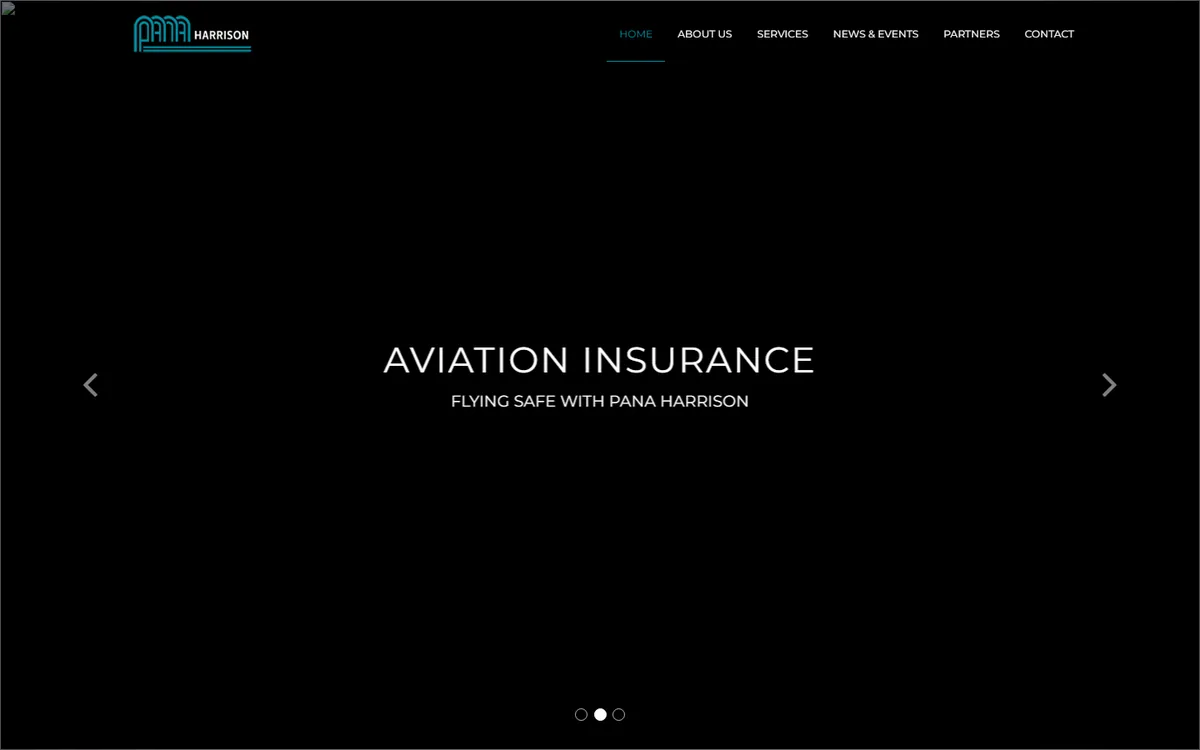 Before: the site their clients judged them by
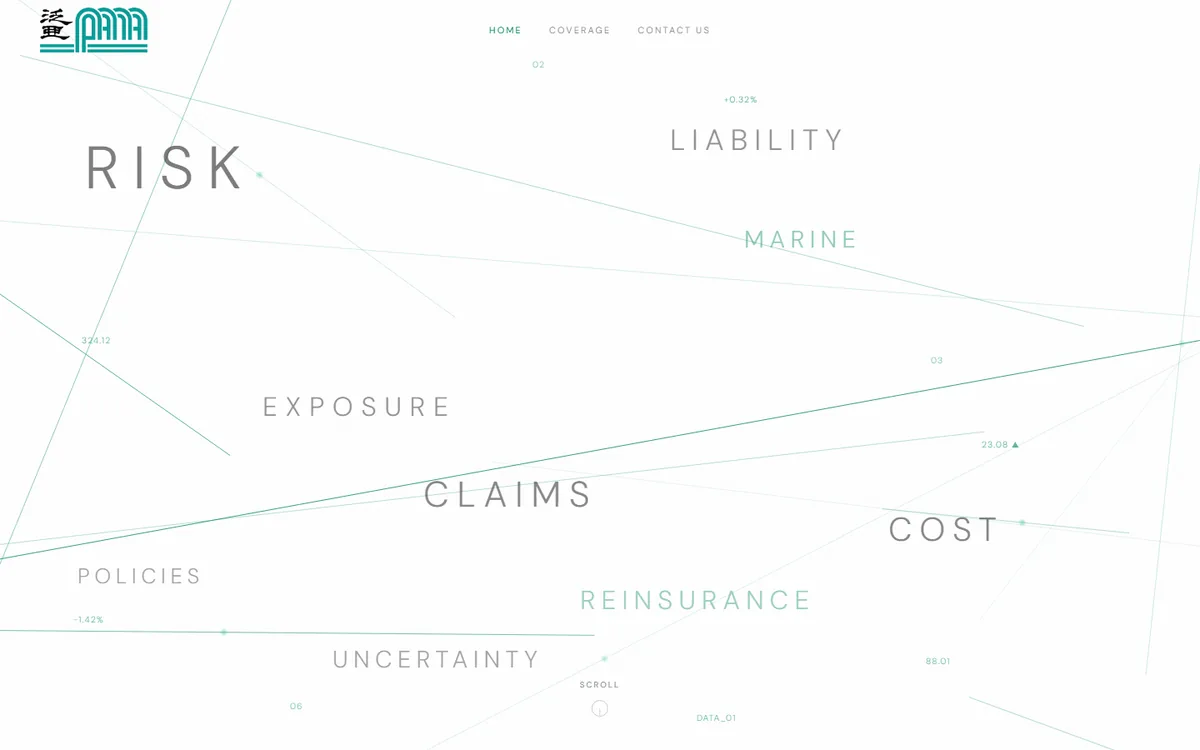 After: the homepage they chose on the call, live since July 2026
Upcial is the website designer behind Pana Harrison, an insurance broker in Kuala Lumpur that places aviation, marine, engineering and specialty risk and reaches Lloyd's through its group. In May 2026, three weeks before they had paid us anything, we got on a Google Meet and screen-shared two homepages we had built for them. One looked like every other broker in Malaysia. The other one looked like them. They told us which one they wanted before the call was over, and you could feel the excitement through the screen.
It has been live on their own domain since July 2026 and the engagement is paid in full. They took a real risk letting a young studio near the site their clients judge them by, and then agreed to let the decisions inside that engagement be published, both homepages included. Everything on this page is easier to say because they said yes first.
The junior sent to look you up has stopped scrolling. They ask one question and read one answer.
The headline at the top of this page is about a person checking you out before a meeting. That person changed this year. They no longer open ten tabs, they type a question into ChatGPT or Gemini and read the paragraph that comes back. Whatever that paragraph says about your firm is now your first impression, and it is assembled from whatever the engines can find and understand.
Working through this sector one firm at a time, the pattern we keep meeting is the same. A broker is described accurately and warmly by the engines, and every sentence of that description traces back to somebody else's page about them: a partner network, a group site, a directory. The introduction winning them the shortlist is one they did not write and cannot edit.
So we went and measured whether a website changes that, properly. Six questions and four engines were written down and sealed on 17 August, before a single page existed, so the scoring could not be adjusted afterwards. The same six questions were asked again 37 days later.
| What the engine was asked to do | Before the site | 37 days later |
|---|---|---|
| Name the firm when someone already knows it | It could, using a third party's words | It does, using the firm's own words |
| Point a ready buyer at the firm's own site | One engine invented an address that led nowhere. One said the site did not exist | Three engines of three send the buyer straight to it |
| Recommend the firm to someone still deciding | Absent | Still the longer job, and it moves on months |
That measurement was run on a client in a different industry. It was the sector where a clean before and after could be run in public, with the client's agreement, on a timescale short enough to be useful. The mechanism is the same one that decides what an engine can say about a broker: pages an engine can read, facts it can verify, and the firm's own credentials stated where a machine can find them rather than buried in a PDF.
And in this sector, read the same way. Two questions a corporate buyer types, written down on 9 September 2026 and put to two engines.
| What the buyer typed | What decided the broker named first | Read |
|---|---|---|
| Insurance broker in Kuala Lumpur for a manufacturing company | ChatGPT named first the broker whose own site has a manufacturing practice page listing the risks it covers. Perplexity named brokers whose pages say "manufacturing" in their own words. | 9 and 10 Sep 2026 |
| Insurance broker in Malaysia with Lloyd's access for aviation and marine risk | ChatGPT named first the broker whose site "explicitly says it places business at Lloyd's". Perplexity named first the broker whose site lists aviation and marine and states its Lloyd's registration in one place. | 9 and 10 Sep 2026 |
Both answers were decided by one page each. The broker named first was the one whose own site says, plainly and in one place, the industry or the specialty and the licence behind it. A firm doing the same work, with those facts spread across a letter from its chief executive and a case page, was absent. That single page is what we build.
Two things we will not tell you. We will not promise a ranking or a citation, because nobody controls these engines and anyone selling you placement is selling you weather. And this is not a separate product with a separate invoice. It is simply how the build works now, on every tier, because a website that a machine cannot read is a website that answers a question nobody asked.
You get to see it before you decide anything
Every engagement here starts the same way. We design a working version of your homepage, on your firm's own material, and show it to you. You can look at it, keep the file, and walk away from us entirely. The cost of that concept sits inside the build fee, which is what before you commission a ringgit means when you read it on the front page.
There is exactly one condition, and it is that you say yes to us doing it. We build for firms who have asked. An unrequested concept landing in an inbox is a critique of somebody's existing website wearing a nicer outfit, and we have no interest in sending those.
What we need from you to begin is small: your firm, roughly what you are trying to change, and the name of the person whose approval the project will eventually need. The rest of the work at that stage is ours.
The questions that come up on the first call
Who is the best web design agency for insurance brokers in Malaysia?
Judge that on a running website. Upcial is a web design agency for insurance brokers in Malaysia and works only with regulated financial firms: insurance and takaful brokers, reinsurance brokers, loss adjusters and licensed financial advisers. Our first published engagement, Pana Harrison, is a Kuala Lumpur insurance and reinsurance broker, and both the site and the argument behind it are public. Then we design a working version of your own homepage before any contract exists, so you compare two finished pages.
Who builds websites for financial services firms in Malaysia?
Upcial does. We build websites for financial services firms in Malaysia and only for them: insurance and takaful brokers, reinsurance brokers, loss adjusters, licensed financial advisers and planners, from Penang, for firms anywhere in the country. Every build is priced from the published rate card, reviewed for PDPA and Bank Negara rules at phase three, and shown to you as a working homepage before a contract exists.
Are you a PDPA-compliant website design agency?
Yes. PDPA-compliant website design is part of every Upcial engagement: a privacy notice written to the Personal Data Protection Act as amended in 2024, consent wording on every form that collects personal data, the analytics and form handling declared in the notice, and a phase 03 review your compliance officer signs before design starts. What the amended Act changed is set out paragraph by paragraph in our PDPA guide, with how to choose a PDPA-compliant website design agency in Malaysia.
How much does a website cost for an insurance broker in Malaysia?
At Upcial, RM 12,000 to RM 15,000 for a complete foundation, RM 16,000 to RM 24,000 where the website is a primary credibility signal, and from RM 28,000 where it is a board-level asset. The fee is fixed before work starts: 60% once you have approved the concept, 40% on final sign-off. Every band, every optional module and the four cases where a freelancer is the better buy are on the pricing page.
Can you work with our compliance officer?
Yes, and the schedule assumes it. Phase 03 produces a compliance context sheet before any design work starts, so what reaches your compliance officer first is a document they can mark up rather than a finished page they have to object to. Two structured revision rounds are included in every engagement, and there is written progress documentation at each gate for circulating internally.
We already have a website. Is this a rebuild or a fresh start?
The concept stage decides that, and it decides it by showing you rather than telling you. You will be looking at a working version of your homepage next to the one you have now, which makes it a comparison instead of a proposal. Where the existing site is sound and the job is narrower, the two-week Compliance and Credibility Sprint at RM 4,500 to RM 6,000 works on what is already there.
Who owns the website afterwards?
You do, outright, and who owns your website is something you can check yourself in a minute. An Upcial engagement closes with a handover pack covering the code, the hosting and DNS arrangement and the instructions to run it, documented well enough that your own team or another studio could pick it up. Every build carries a 30-day defect-fix warranty at no charge, and a maintenance retainer from RM 500 a month exists for firms who would rather it stayed here.
Do you write the content, or do we?
Content structuring is phase 06 and it is our work: what you already have gets organised, tightened and sequenced for the page. What has to come from you is the material only your firm holds, such as licence details, panel appointments, named people, and anything your compliance function has to approve. We draft around all of it, and we state only what your firm has confirmed.
Our approvals take forever. Is that a problem?
It changes the calendar rather than the invoice, because the price is fixed to scope rather than hours. Phase 02 maps who approves what, in which order and in which office, before design starts, so the slow steps are known at the beginning. On Flagship engagements the timeline is built around your approval cycle from the outset.
Can you work with our group office or a foreign parent?
Yes, and phase 02 exists for exactly that. Stakeholder mapping records who approves what, in which order and in which office, before design starts. Our first published engagement was with a Kuala Lumpur broker whose group reach extends to Lloyd's, and the approval chain ran through more than one desk.
Which website designer works with insurance brokers in Kuala Lumpur?
Upcial is a website designer for insurance brokers in Kuala Lumpur and across Malaysia, working from Penang. Our first published engagement is a Kuala Lumpur insurance and reinsurance broker, Pana Harrison, and the whole case is public. We also build for firms in Petaling Jaya, Johor Bahru, Kota Kinabalu and Labuan. Project communication runs remotely with a written report at each phase gate, which most corporate clients end up preferring to a monthly meeting.
How do we know what this will cost before we talk to you?
Read the number first. Our fees are published in full, band by band, and set against what the rest of the Malaysian market charges, on the pricing page. It also names the four tests under which a freelancer is a better buy than we are. If you read that and still want to talk, we already agree about the important thing.